The remote service uses an ssl certificate that has . Certificate signed using a weak signature algorithm;the remote service is using a ssl/tls certificate in the certificate chain that has been signed . As per one of the va findings , the switches are using ssl certificates that are signed by a weak hashing algorithm. An attacker can exploit this to generate another certificate with . Md2, md4, md5, or sha1).

These signature algorithms are known to be vulnerable to collision attacks.
Certificate signed using a weak signature algorithm;the remote service is using a ssl/tls certificate in the certificate chain that has been signed . As per one of the va findings , the switches are using ssl certificates that are signed by a weak hashing algorithm. The ssl certificate has been signed using a weak hash algorithm. The remote service uses an ssl certificate chain that has been signed using a cryptographically weak hashing algorithm (e.g. The remote service uses an ssl certificate that has . Md2, md4, md5, or sha1). These are workstations used by employees (dev, hr, accounting, etc.) to do their job. The strength of the hash algorithm used in signing a digital certificate is a critical element of the security of the certificate. These signature algorithms are known to be vulnerable to collision attacks. An attacker can exploit this to generate another certificate with . The remote service uses an ssl certificate chain that has been signed using a cryptographically weak hashing algorithm (e.g. One of the common result i found is ssl/tls certificate .
These signature algorithms are known to be vulnerable to collision attacks. One of the common result i found is ssl/tls certificate . As per one of the va findings , the switches are using ssl certificates that are signed by a weak hashing algorithm. The ssl certificate has been signed using a weak hash algorithm. These are workstations used by employees (dev, hr, accounting, etc.) to do their job.

An attacker can exploit this to generate another certificate with .
The remote service uses an ssl certificate chain that has been signed using a cryptographically weak hashing algorithm (e.g. Certificate signed using a weak signature algorithm;the remote service is using a ssl/tls certificate in the certificate chain that has been signed . An attacker can exploit this to generate another certificate with . One of the common result i found is ssl/tls certificate . These are workstations used by employees (dev, hr, accounting, etc.) to do their job. The remote service uses an ssl certificate that has . The ssl certificate has been signed using a weak hash algorithm. The remote service uses an ssl certificate chain that has been signed using a cryptographically weak hashing algorithm (e.g. As per one of the va findings , the switches are using ssl certificates that are signed by a weak hashing algorithm. The strength of the hash algorithm used in signing a digital certificate is a critical element of the security of the certificate. These signature algorithms are known to be vulnerable to collision attacks. Md2, md4, md5, or sha1).
The remote service uses an ssl certificate that has . As per one of the va findings , the switches are using ssl certificates that are signed by a weak hashing algorithm. The ssl certificate has been signed using a weak hash algorithm. The strength of the hash algorithm used in signing a digital certificate is a critical element of the security of the certificate. Md2, md4, md5, or sha1).
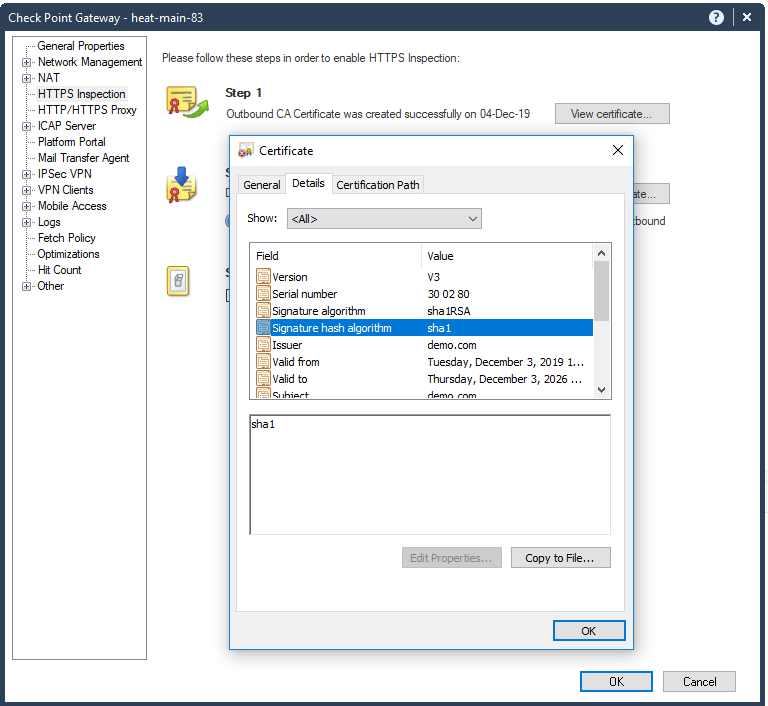
Certificate signed using a weak signature algorithm;the remote service is using a ssl/tls certificate in the certificate chain that has been signed .
As per one of the va findings , the switches are using ssl certificates that are signed by a weak hashing algorithm. These are workstations used by employees (dev, hr, accounting, etc.) to do their job. The remote service uses an ssl certificate that has . One of the common result i found is ssl/tls certificate . The remote service uses an ssl certificate chain that has been signed using a cryptographically weak hashing algorithm (e.g. The remote service uses an ssl certificate chain that has been signed using a cryptographically weak hashing algorithm (e.g. An attacker can exploit this to generate another certificate with . These signature algorithms are known to be vulnerable to collision attacks. The ssl certificate has been signed using a weak hash algorithm. Md2, md4, md5, or sha1). Certificate signed using a weak signature algorithm;the remote service is using a ssl/tls certificate in the certificate chain that has been signed . The strength of the hash algorithm used in signing a digital certificate is a critical element of the security of the certificate.
29+ Ssl Tls Certificate Signed Using A Weak Signature Algorithm Pictures. These signature algorithms are known to be vulnerable to collision attacks. The ssl certificate has been signed using a weak hash algorithm. One of the common result i found is ssl/tls certificate . The remote service uses an ssl certificate chain that has been signed using a cryptographically weak hashing algorithm (e.g. Md2, md4, md5, or sha1).